

How Does an Idea Take Shape?
The 360 concept reveals the journey that transforms an intuition into a project — from research to model development.
Introduction
Every project starts with a question.
Sometimes the answer is obvious. Other times it takes months of research, observation and experimentation before it begins to take shape.
The 360 concept originated from a simple reflection: Is it possible to transfer the sensations of movement, balance and fluidity typical of snowboarding onto surfaces other than snow? From this intuition began a design journey involving analysis, research, concept development, model making and real-world testing.
This article is not only about a project. It is about the process that made the project possible. Through sketches, models, physical testing and iterative development, the 360 concept becomes a case study that illustrates how an idea can gradually evolve into a coherent system of form, function and user experience.
More than the final outcome, what matters here is the journey itself: the initial questions, design decisions, mistakes, validations and insights that guided the development process. Because behind every object there is always something invisible: the process that brought it into existence.
Contents
1. The Starting Point: Observing Movement
2. Defining the Design Challenge
3. Research and Context Analysis
6. Testing, Verification and Learning
7. From Behaviour to Structure
1. The Starting Point: Observing Movement
Many projects do not begin with a technology or a market opportunity. They begin with observation.
In the case of the 360 concept, everything originated from a personal passion: snowboarding. More than the sport itself, what attracted attention was the way the body interacts with the terrain. The sensation of balance, weight transfer, fluid turns and the direct relationship between movement and surface. Snowboarding allows people to experience the ground in an immediate way. Every variation in pressure generates a response. Every movement of the body alters the trajectory. Motion is not imposed by a mechanism; it emerges from the continuous interaction between the rider, the equipment and the environment.
From this observation, a simple question emerged. Could these sensations be transferred beyond snow? The goal was not to design a new skateboard or improve an existing product. The ambition was broader: to understand which elements make the snowboarding experience so engaging and to explore whether they could be reinterpreted in a completely different context.
This initial question became the true starting point of the project. Before thinking about shapes, materials or technical solutions, it was necessary to understand which dynamics made this type of experience possible. The idea therefore did not begin with an object.
It began with a behaviour. This approach still represents a fundamental part of the design process today: observing how people interact with the world before searching for a formal solution. Every project can be described through shapes, materials and functions. Yet very often its true origin lies elsewhere. In a question. In a curiosity. Or in the observation of something that already exists and suddenly suggests new possibilities.
Is it possible to transfer the movement, balance and fluidity of snowboarding onto surfaces beyond snow?
2. Defining the Design Challenge
Once the initial intuition had been identified, the next step was to transform an open question into a concrete design challenge. The idea of transferring some of the sensations associated with snowboarding onto different surfaces was intriguing, but still too broad to become a project.
Boundaries had to be defined.
Every successful project is built on a balance between creative freedom and real constraints. The purpose of this phase is precisely that: to establish what should be achieved, for whom and under which conditions.
In the case of the 360 concept, several key requirements emerged from the outset. The system had to be powered exclusively by body movement or gravity, without motors or external assistance. It needed to maintain a playful and sporting dimension, encouraging exploration and enjoyment. It had to operate on surfaces other than conventional asphalt, expanding the range of possible environments. Finally, it had to offer a riding experience based on balance, body movement and active weight transfer.
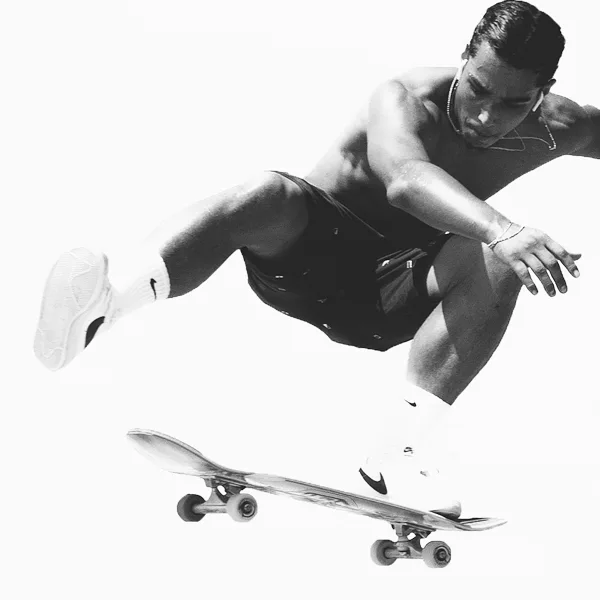
Skateboarder
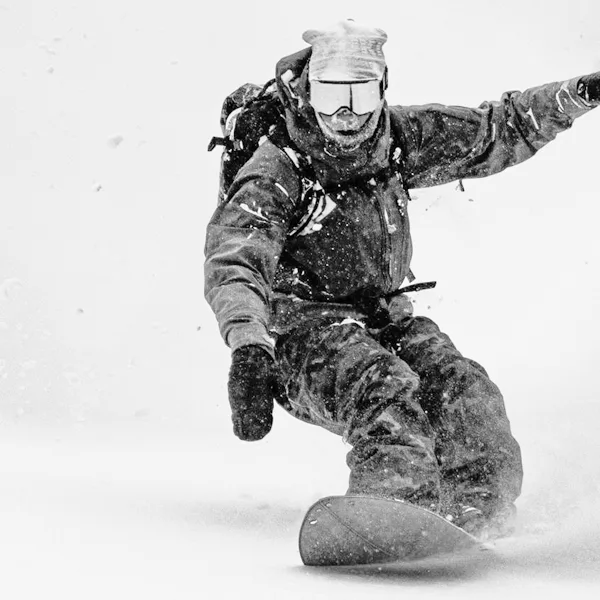
Snowboarder
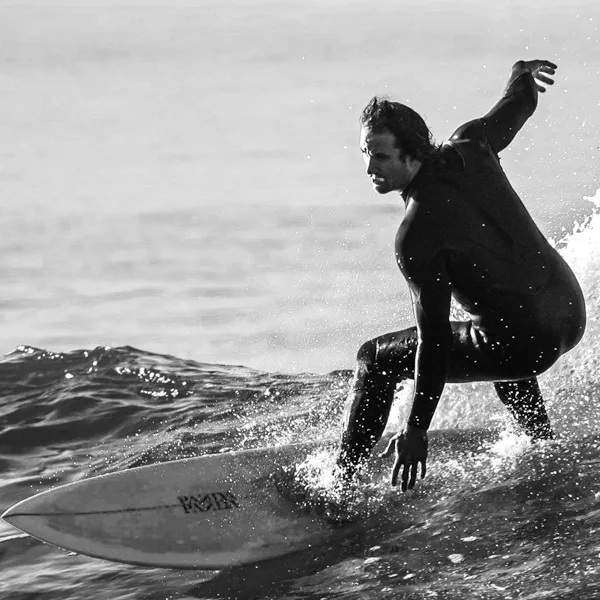
Surfer
Defining these principles helped establish a clear research framework and avoided one of the most common mistakes in design: searching for solutions before fully understanding the problem. At this stage there is still no final form. There are only objectives, constraints and questions that will guide every subsequent decision. The stronger these foundations are, the more coherent the project will become over time.
3. Research and Context Analysis
Once the design challenge had been defined, attention shifted towards understanding the context. Before imagining new solutions, it was necessary to observe what already existed. The purpose of this phase was not to seek aesthetic inspiration, but to understand how similar challenges had been addressed by others.
The research focused on recreational and sports mobility systems based on balance and body movement. Skateboards, roller skates, snowboards, mountainboards and other riding devices represented different interpretations of the same principle: transforming body movement into control and motion.
The analysis revealed that most of these systems shared several common characteristics. A rigid platform. Relatively regular surfaces. A clear separation between the user and the rolling elements. While studying these products, an interesting reflection emerged. Perhaps the component that needed to be reconsidered was not the frame. Perhaps it was the wheel itself. This insight became a turning point in the development process. Normally, the wheel is considered a purely technical component whose role is simply to reduce friction and enable movement.
During the research phase, however, a different perspective began to emerge. What if the wheel became an active part of the experience? What if it evolved from a mechanical component into a direct interface between the body and the terrain? Many of the ideas developed in the following stages originated from this question.
The first sketches, ergonomic studies and exploratory models did not aim to define a final product. Their purpose was to investigate possibilities and understand how the relationship between user, balance and surface could be reimagined. It is at this point that research stops being analysis and starts becoming concept.
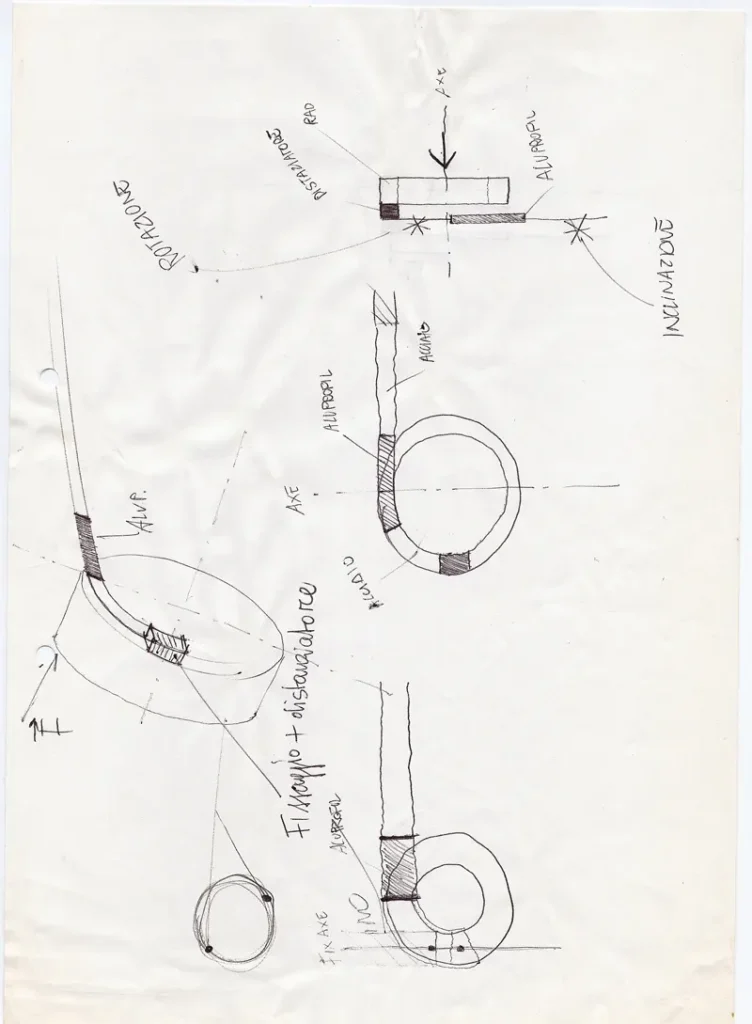
The first sketches transform an initial intuition into a possible design direction.
4. From Intuition to Concept
Every research phase generates information. Only some of it, however, evolves into a clear design direction. In the case of the 360 concept, the turning point came when the wheel stopped being considered a simple technical component and became the centre of the entire system. Until then, most of the solutions analysed followed a familiar logic: a central structure, a platform for standing on, and a wheel system responsible for generating movement.
The research suggested a different possibility. What if the body moved inside the wheel rather than standing on top of it? This simple question opened up an entirely new design territory. The wheel was no longer a passive element. It became the direct interface between the rider and the terrain. Movement would not be controlled through complex mechanisms, but through balance, weight transfer and the body’s ability to interact with the system.
As is often the case during the early stages of development, the concept did not emerge in its final form. Different configurations were explored through sketches, studies and preliminary models. Some proved too complex. Others lacked stability. Others moved too far away from the original objective.
Yet every attempt contributed to a deeper understanding of the challenge and helped strengthen the identity of the project. Gradually, a solution emerged based on two large independent wheels connected by a flexible structure. A system capable of transforming controlled deformation into movement and direction changes. The turn was no longer generated by a conventional steering mechanism. Instead, it emerged from the rider’s movement and the flexibility of the structure itself.
The concept was beginning to define its own character. Not as a means of transport. Not as an evolution of the skateboard. But as a new riding experience built around balance, fluidity and the direct interaction between body and terrain.
5. Development and Models
A promising idea can be convincing on paper. Design, however, always requires verification. Drawings and sketches make it possible to explore possibilities, but only physical models allow designers to understand proportions, dimensions, balance and system behaviour in a meaningful way. For this reason, the development of the 360 concept was accompanied by a series of physical models and iterative evaluations.
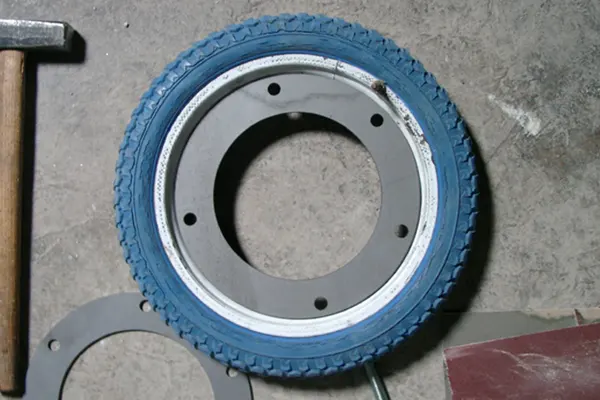
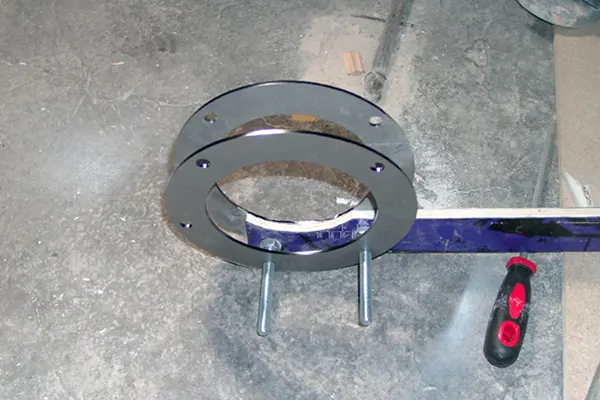
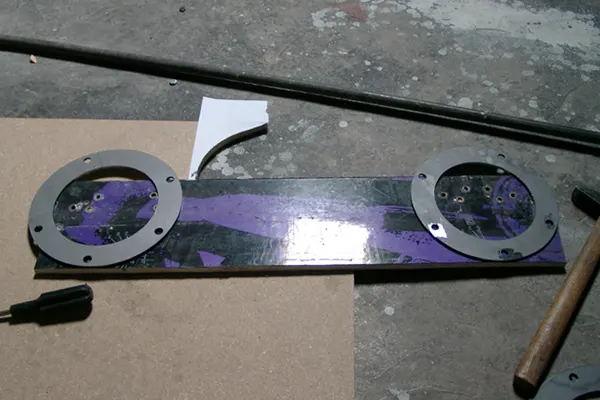
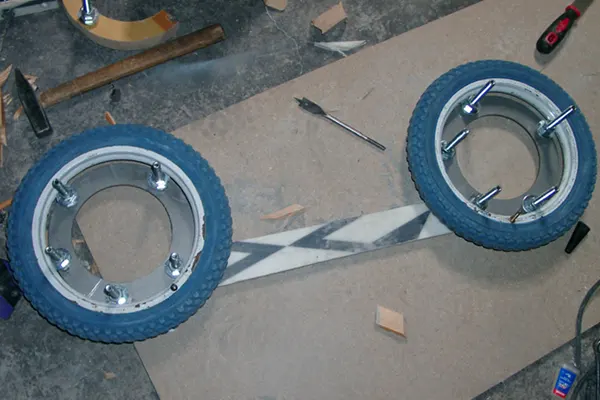
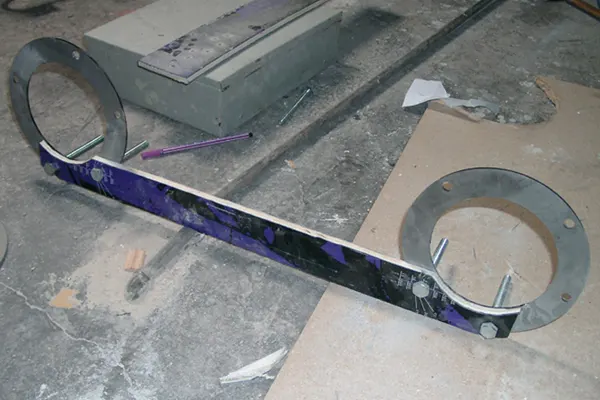
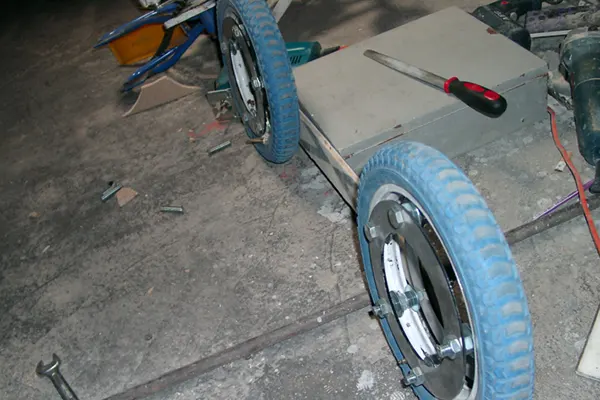
The goal was not to create realistic representations of the project. The goal was to understand how it behaved. Each model was built to answer a specific question. How does the structure react under flexion? What distance should exist between the wheels? How does the body interact with the system? Which proportions feel natural during use?
Through these investigations, the project gradually moved beyond theory. Initial assumptions were confronted with reality. Some were confirmed. Others had to be adjusted or reconsidered. This phase often remains invisible to those observing the final result, yet it is one of the most important parts of the design process. Many decisions that later appear obvious originate precisely from these moments of testing and evaluation.
At the same time, the project’s visual language also began to take shape. Volumes, proportions and surfaces started to define a recognisable identity. The project was still far from a final product, but it was progressively finding coherence between function, form and user experience. Development is not about refining an already complete idea. It is about continuously questioning what you believe you understand. This is where a project truly begins to take shape.
6. Testing, Verification and Learning
Every project reaches a decisive moment. The moment when assumptions are tested. Up to this point, the 360 concept had evolved through research, sketches, physical models and dimensional studies. Many decisions had been based on analysis and design reasoning. Yet there is a significant difference between imagining behaviour and experiencing it directly. To understand how the system actually worked, it had to be used.
Practical testing revealed aspects that would have been difficult to discover through drawings or models alone. Balance. The response of the flexible structure. Weight transfer. The perception of the terrain. These elements can only be properly evaluated through direct experience. Some of the original assumptions proved correct. Others required adjustments, modifications and further testing. This stage represents one of the most valuable parts of the design process. Not because it confirms ideas. But because it challenges them. Every test generates information. Even when something does not behave as expected. In fact, the most valuable insights often emerge precisely when things fail to work as planned.
In the case of the 360 concept, practical testing helped clarify the relationship between body, system and terrain, while confirming the effectiveness of an approach based on controlled flexion and active weight transfer. More than validating a form, this phase validated a behaviour. And from the very beginning, behaviour had always been at the heart of the project.
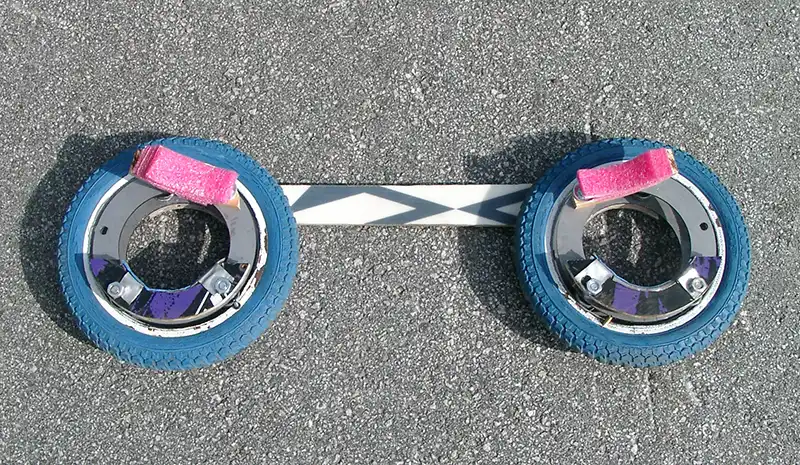
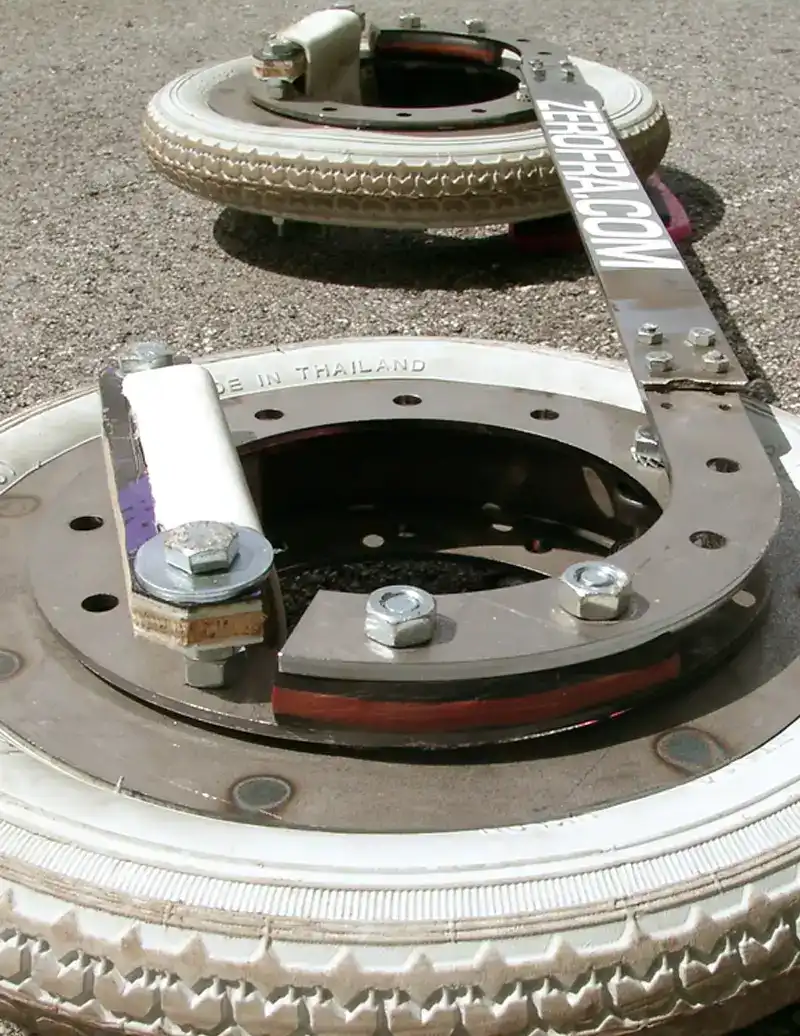
Each model answers a specific question: balance, steering, flexion or control.
See the 360 in action
The research moves beyond the workshop and meets real-world movement.
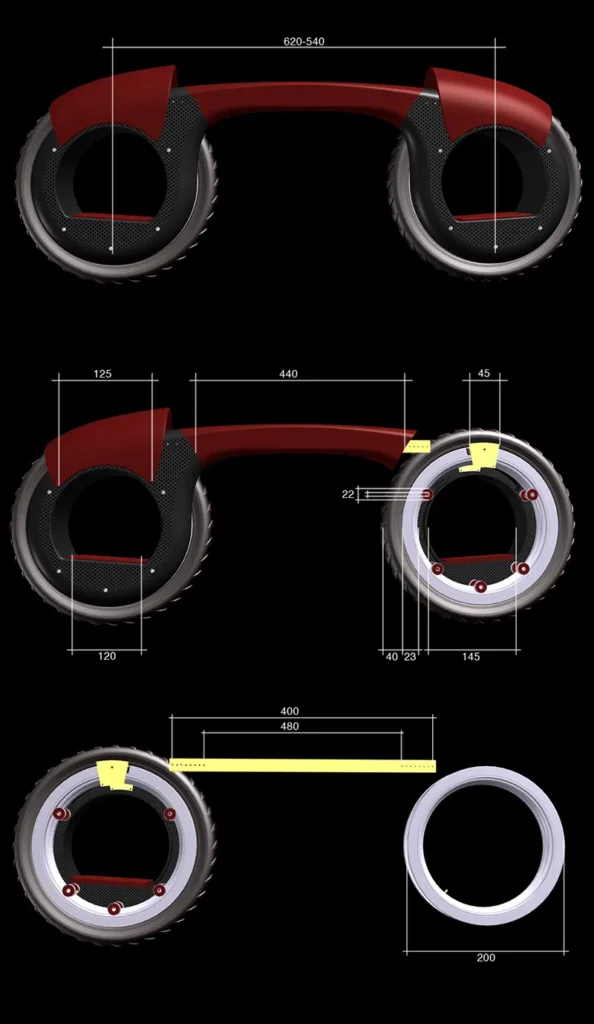
Before defining the final form, the project is verified from a structural, geometrical and construction perspective.
7. From Behaviour to Structure
After the physical models had been tested, the project reached an important milestone. The fundamental principles of operation had been defined, and the key dynamics of the system had become clear. At this point, attention could shift from behaviour to construction.
This phase did not emerge from a need to create renderings or visual representations. Instead, it arose from the need to understand how the concept could realistically be developed and built. The project was therefore translated into a digital environment. Not to represent it, but to define it. Dimensions, geometries, connection points and components began to take on a more precise structure. The insights gathered during research and model making were transformed into measurable data and constructive relationships.
At the same time, materials, assembly methods and potential manufacturing solutions were investigated. The objective was not yet to develop an industrial product.
Rather, it was to establish a technically coherent foundation on which the concept could continue to evolve. During this stage, the design process became more rational. Decisions were no longer driven solely by observations of movement, but also by feasibility, material properties and construction logic. The digital model became a tool for verification and synthesis. A necessary step in transforming an intuition into a structured design system. Only once these aspects had been defined was it possible to develop the final presentation model, used to communicate the concept and its overall vision.
8. From Structure to Communication
As a project reaches a certain level of maturity, a new challenge emerges. Understanding the project is no longer enough. It must also be communicated. Throughout the development of the 360 concept, different models were created for different purposes. Some were designed to verify functional and dynamic aspects. Others were developed to communicate the project more clearly and effectively.
This distinction is important. A verification model does not need to be beautiful. It needs to be useful. It can be built using simple materials, reused components or temporary solutions. Its value lies in the answers it provides. A presentation model serves a different purpose. It communicates the identity of the project, its proportions, formal language and overall vision.
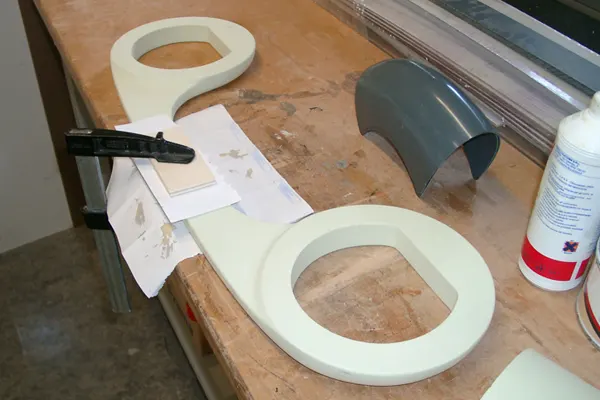
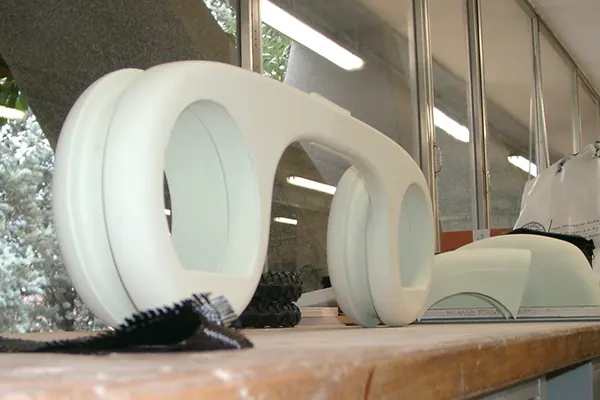
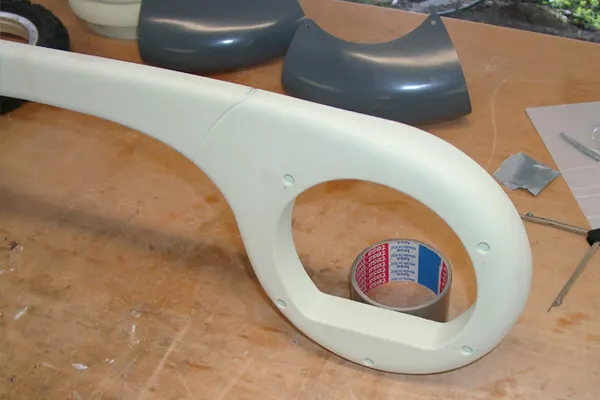
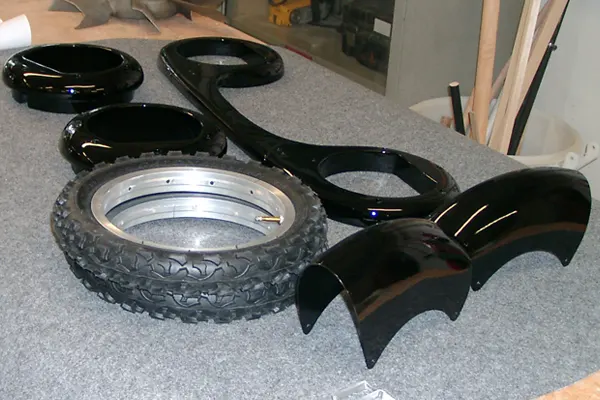
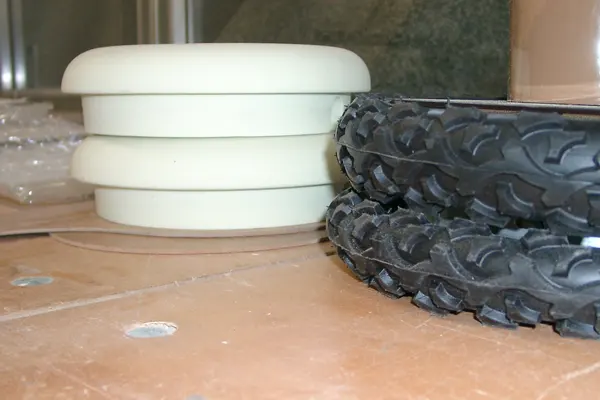
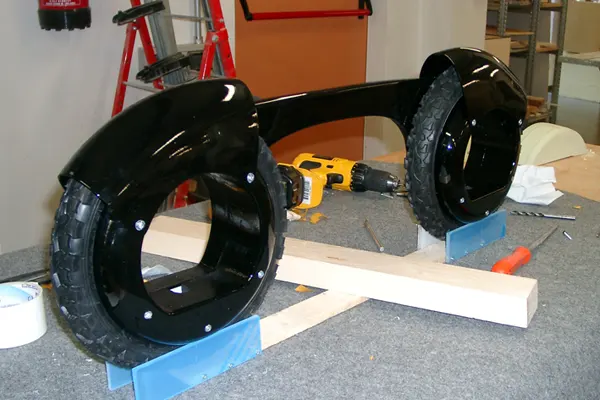
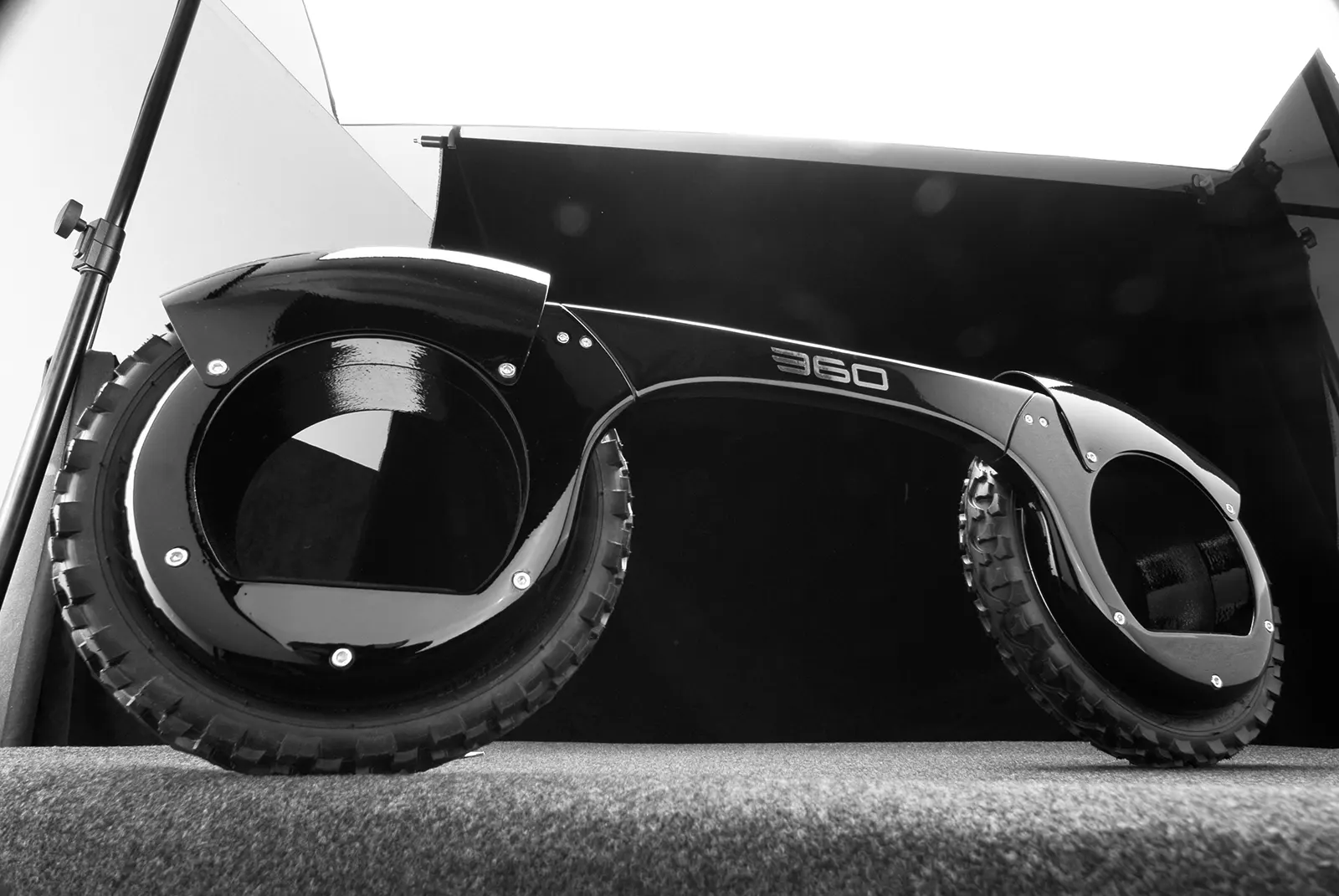
The final model of the 360 concept was developed with precisely this objective. To translate months of research, experimentation and development into a form capable of communicating the essence of the project at a glance. The continuous surfaces, essential volumes and sculptural character of the model are not merely aesthetic choices. They are the result of a process of simplification. An effort to remove what is unnecessary and reveal the core idea behind the project.
At this stage, design is no longer only about solving a problem. It is also about communicating a vision.
9. What This Project Teaches
Looking back, the most interesting aspect of the 360 concept is not the final object itself. It is the journey that made it possible. Many projects are remembered for their outcome. Far fewer people pay attention to everything that happens beforehand: the research, the doubts, the evaluations, the mistakes, the revisions. And yet it is precisely during these stages that a project takes shape.
The 360 concept demonstrates that the design process is not a linear sequence of steps. It is a continuous cycle of observation, experimentation and learning. The original idea did not contain the solution. It contained only a question. Everything else emerged gradually through the dialogue between intuition and reality. This approach continues to guide many projects today.
Tools evolve. Contexts change. Technologies advance.
But the principle remains the same.
Before designing an object, it is necessary to understand the problem.
Before searching for a solution, it is necessary to observe.
And before making decisions, it is necessary to verify assumptions.
Conclusion
Every project tells a story.
Yet in most cases, only the final chapter is visible. Renderings, photographs and finished products reveal the outcome, but rarely the process that made it possible. The 360 concept began as an exploration of movement, balance and the relationship between body and terrain. Over time, it became something more. A practical example of how an intuition can evolve through research, development, model making and continuous verification.
More than the project itself, what remains relevant today is the method behind it.
An approach that begins with observation, moves through experimentation and treats every phase of the process as an opportunity to learn something new.
Because every project is, above all, a journey of discovery.
A new concept of movement
An experimental mobility concept built around balance, movement and emotion.
The mistake every designer should make only once.
When skipping a phase of the design process becomes the most important lesson of the entire project.