

Experimental Mobility Concept Between Balance, Movement and Emotion
An independent research project born from the intersection of snowboarding, movement and design experimentation.
A concept developed to explore new ways of balancing, carving and moving across uneven terrain through an alternative riding system.
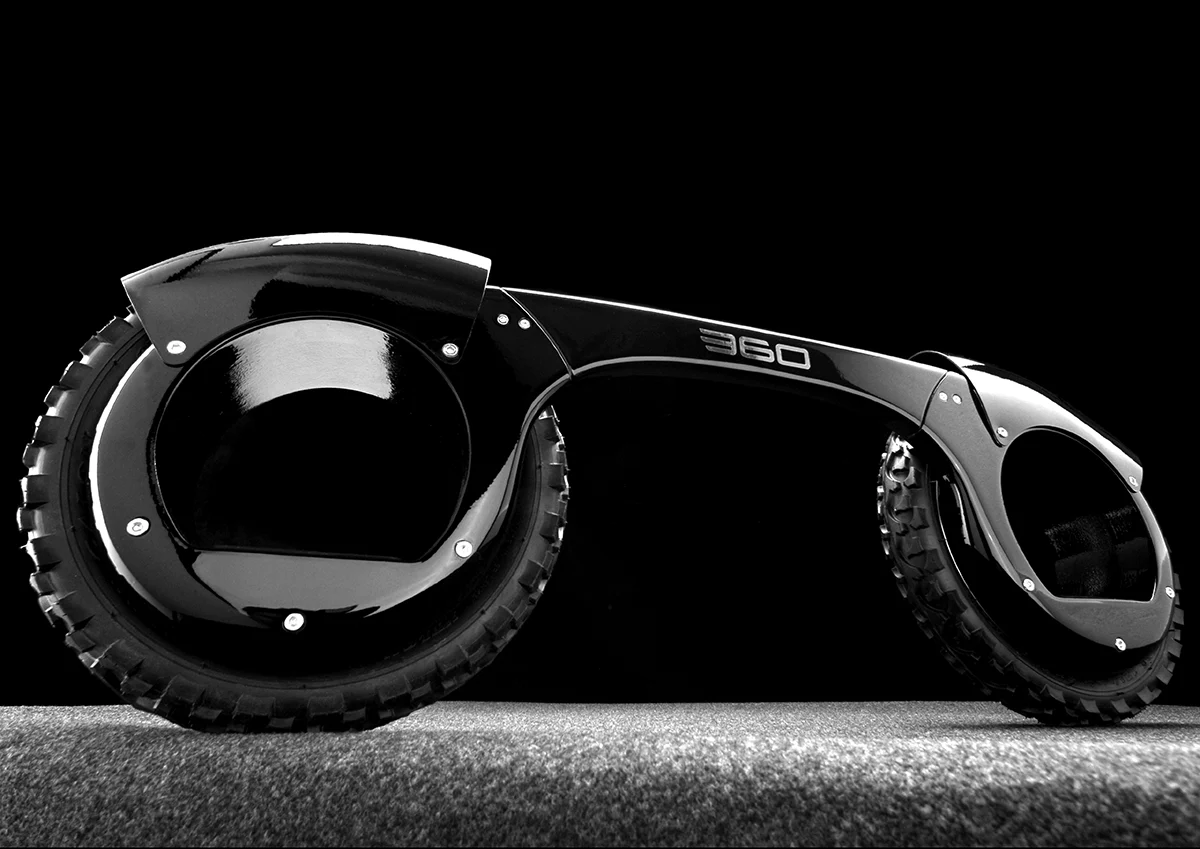
Mobility concept
Client — Independent Research
Status — Experimental Concept
Award — Red Dot Design Luminary

Rethinking Movement Beyond the Limits of Traditional Skateboarding
Challenge
Traditional skateboards are designed for smooth and predictable surfaces, limiting the riding experience primarily to urban pavement.
The project started from a simple question:
Could the freedom of movement experienced in snowboarding be transferred to different terrains such as gravel paths, grass and uneven surfaces?
The goal was not to design a new skateboard, but to explore a different relationship between the body, balance and the ground.
Solution
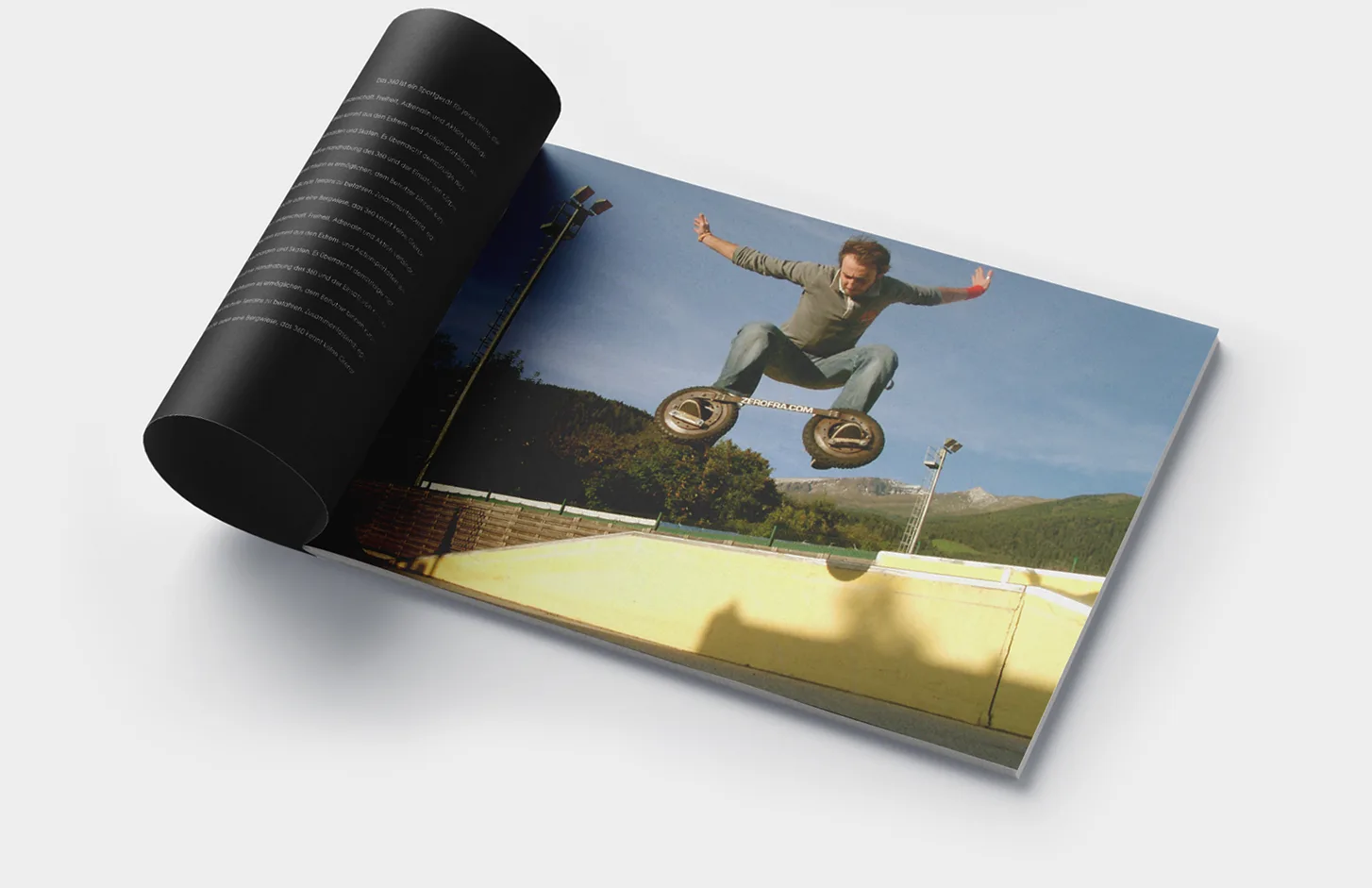
The project introduces a movement system based on two large independent wheels connected by a flexible steel structure.
The wheel is no longer treated as a simple technical component, but as an ergonomic space designed to accommodate the foot and control body movement.
The flexibility of the central structure enables carving-like turns and progressive weight transfers, creating a fluid riding experience even on unconventional surfaces.
The braking system is integrated directly into the upper wheel guards, transforming each component into an active part of the riding experience.
Result
An experimental concept that combines industrial design, movement research and physical prototyping into a coherent system.
Developed through working models, mock-ups and independent research, the project received international recognition for its visionary approach to alternative mobility.
Watch the video
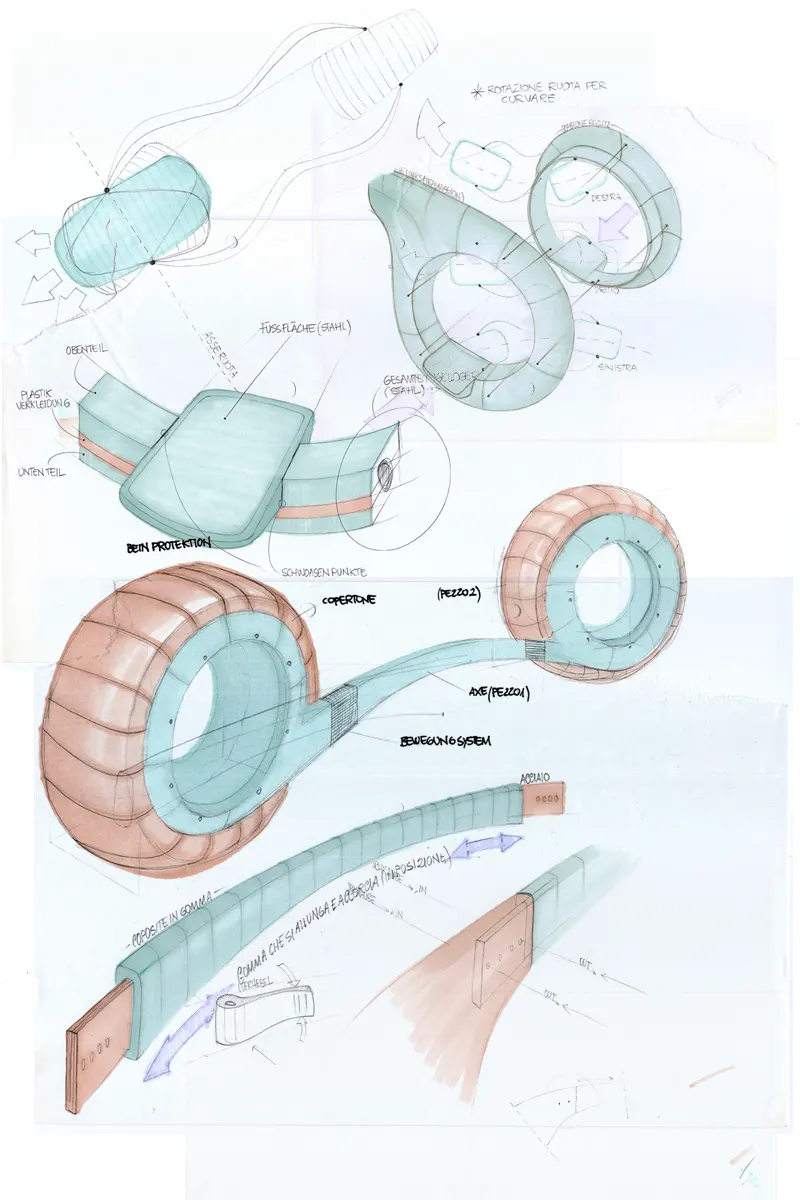
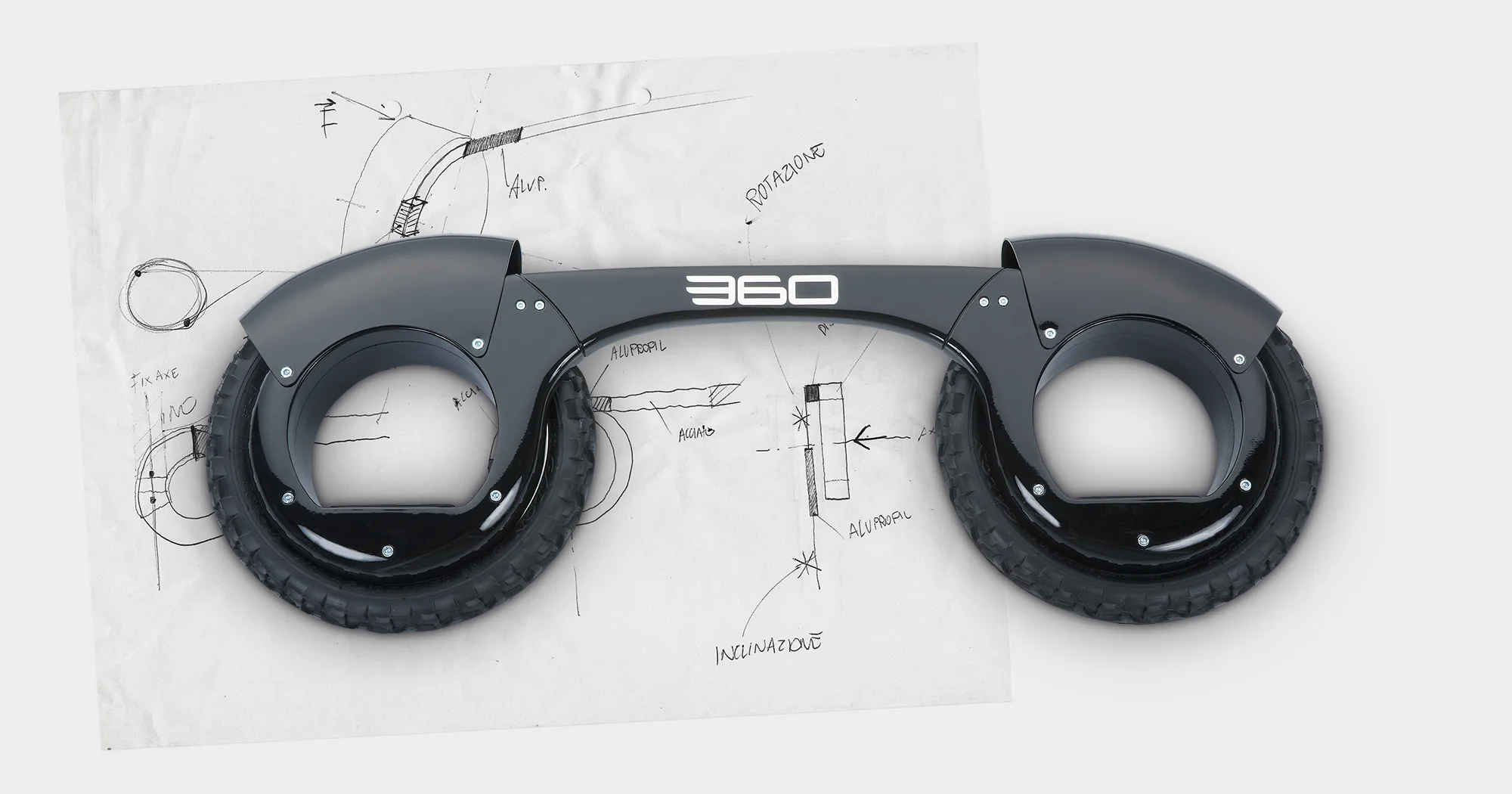
The project was developed through independent research, physical modelling, manual prototyping and hands-on movement experimentation.
The Wheel as an Interface Between Body and Terrain
The entire project originated from the desire to transform the wheel from a purely technical component into the central element of the riding experience.
Balance, flexibility and control become part of a design language that explores the direct relationship between the user, the surface and movement dynamics.
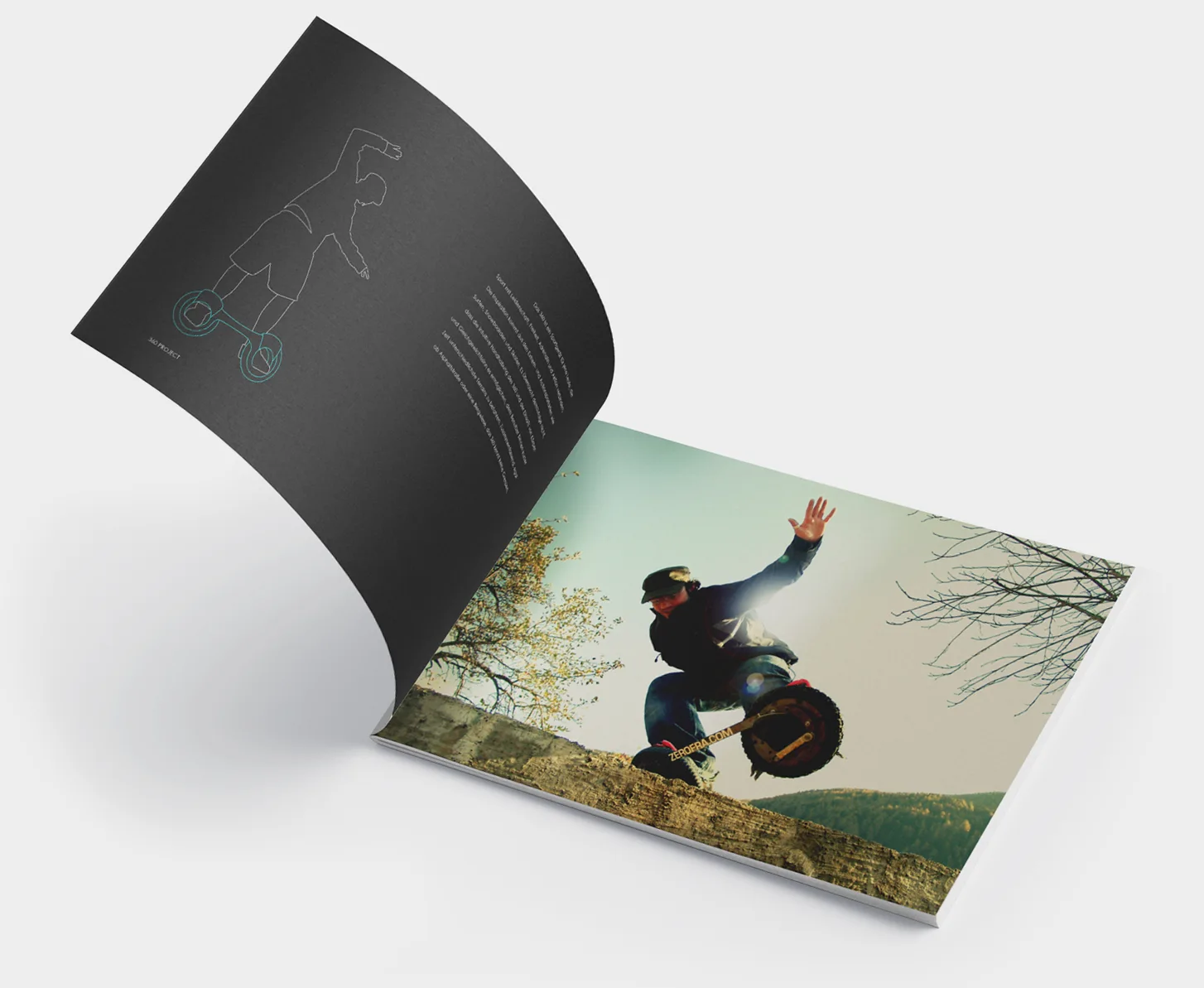
Project Insight
The project explores the relationship between alternative mobility, dynamic balance and experimental design.
The research originated from observing movement in snowboarding and from the desire to transfer the sensation of carving and fluid motion to terrains beyond the traditional urban environment.
Rather than designing a conventional sports product, the objective was to create a new riding experience capable of redefining the relationship between the body and the ground.
Movement and Flexibility
Unlike a traditional skateboard, the system uses a flexible structure that generates movement through progressive weight transfer.
Turning is not mechanically imposed but emerges from the controlled deformation of the structure and the direct interaction between rider and terrain.
Physical Prototyping
The entire project was developed through physical models, manual experimentation and the independent construction of functional prototypes.
The research included:
– Ergonomic studies
– Dimensional and functional mock-ups
– Dynamic testing
– Form development
– Final concept design development
A design approach that combines technical research, intuition and direct experimentation.
A Visionary Concept
Although the project remains an experimental concept, it anticipated themes that are now central to research in micro-mobility and new outdoor movement experiences.
The value of the project lies not only in the final object, but in the research process that transformed a personal intuition into a coherent system of form, function and behaviour.
How Does an Idea Take Shape? ←
From research to model development
The 360 concept reveals the journey that transforms an intuition into a project