
The Mistake Every Designer Should Make Only Once
How an apparently perfect table revealed the importance of verification in the design process.
Introduction
Every project starts with an idea.
Sometimes it evolves gradually. Sometimes it comes together very quickly. And that is often when mistakes happen.
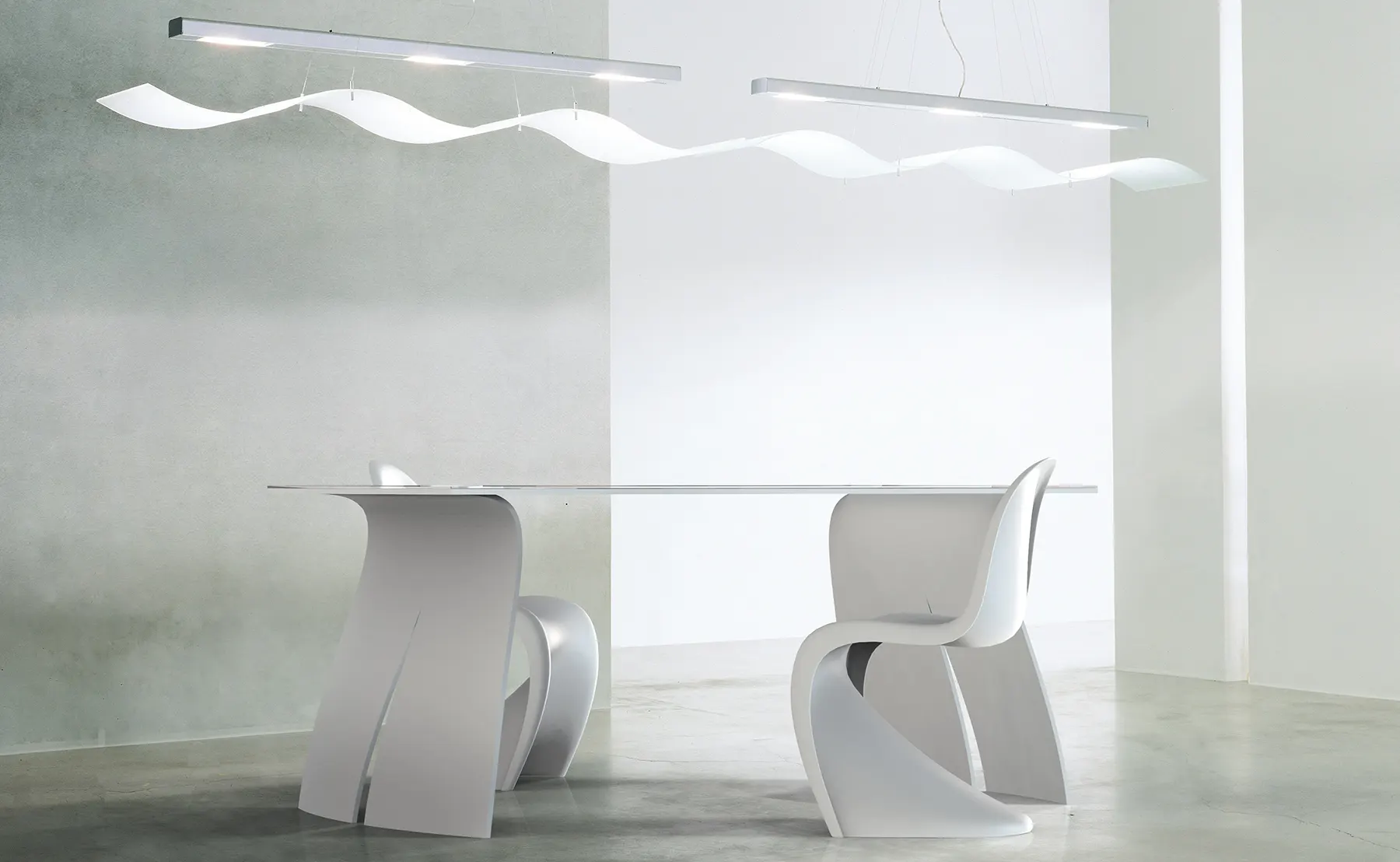
This project was developed in 2015 as part of a design competition focused on Starkryl®, a material available in sheet form that can be cut, milled, drilled and finished using technologies commonly employed in woodworking.
At first glance, everything seemed to work perfectly. The brief was clear. The concept was coherent. The product looked feasible from both a technical and production perspective.
Years later, however, this project has become something different. Not because of its success, but because of a mistake.
A mistake that still reminds me today why every single phase of the design process exists for a reason.
This article is therefore not simply about a table. It is about a lesson. Because good design is not built on speed. It is built on verification.
Contents
2. When everything seems to work
4. The flaw hidden in the form
1. Understanding the brief
Every project begins with a context.
In this case, the starting point was a design competition dedicated to Starkryl®, a material designed to showcase its potential through furniture and interior applications.
The objective was straightforward: create a piece of furniture that could highlight the material’s possibilities. The challenge was not simply to design a table. The material itself had to become an integral part of the project. Its characteristics needed to be visible, understandable and meaningful.
Very early on, a clear direction emerged: soft curves, fluid surfaces and a simple, continuous structure. Everything appeared logical. Nothing suggested that a fundamental problem was still hidden within the project.
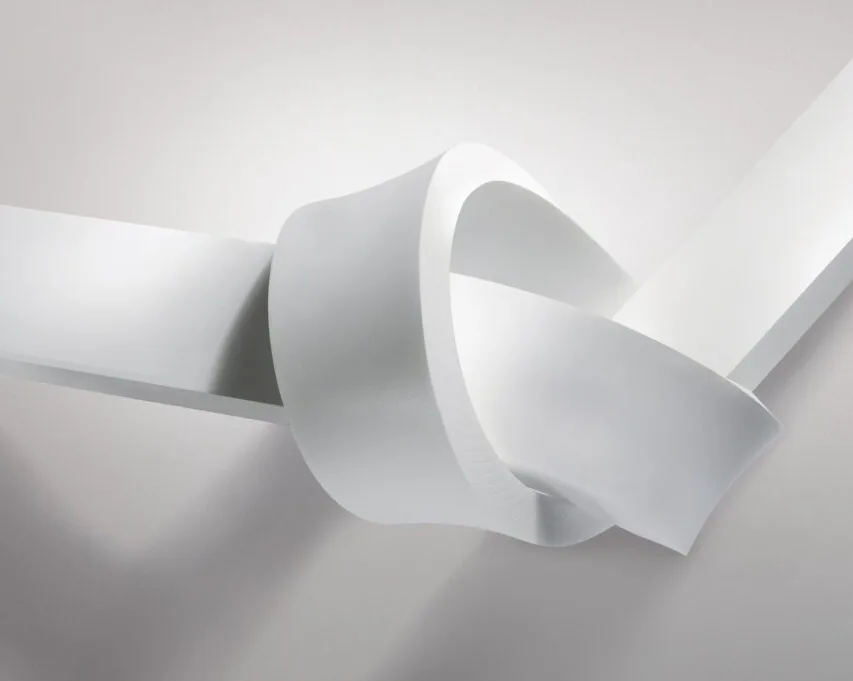
Close-up of the Starkryl® material that served as the starting point for the project.
2. When everything seems to work
After the initial research phase, the project moved into development. As often happens, the transition from sketches to digital modelling felt completely natural. The proportions were defined. The surfaces looked balanced. The structure appeared feasible. From a technical perspective, the project seemed fully resolved.
And that is precisely where the most interesting aspect lies.
Many design mistakes do not happen when something looks wrong. They happen when everything looks right. Because that is when we lower our guard and begin to take certain assumptions for granted.
That is exactly what happened here.
The project looked coherent enough to make me believe it had already been solved. In reality, one fundamental step was still missing. And that missing step would eventually reveal the biggest flaw of the entire project.
3. The step I skipped
Looking back at this project today, the problem was not the material. It was not the digital model. It was not even the production process.
The problem appeared earlier. It was part of the process itself. At the time, I had already completed most of the stages that I still consider essential today: understanding the brief, conducting research, sketching ideas and developing the concept.
From there, I moved directly into 3D modelling and technical development. One fundamental step was missing. Physical verification through simple models.
Due to time constraints, I decided to skip that phase. At the time, it seemed like a reasonable decision. The table looked correct. The proportions worked. The structure appeared coherent. There seemed to be no reason to slow down.
Today, I know that this was the biggest mistake of the entire project. Because some information simply cannot be discovered on a screen. Not through drawings. Not through renderings. Not even through highly detailed digital models. Some things only become visible when an idea is physically tested. And that is exactly the purpose of verification. Not to confirm what we believe we know. But to challenge what we are taking for granted. In my case, I was taking one essential aspect for granted.
Stability.
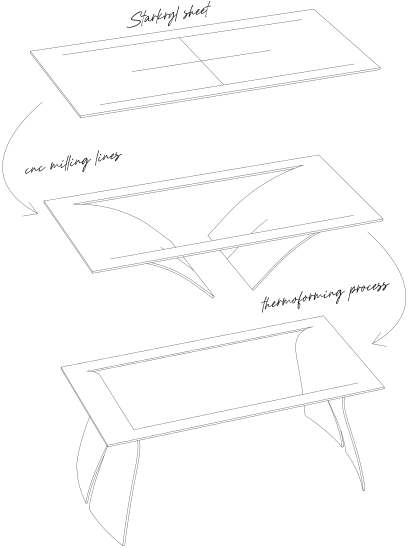
Diagram illustrating the construction principle and the transformation of the sheet into a table.
4. The flaw hidden in the form
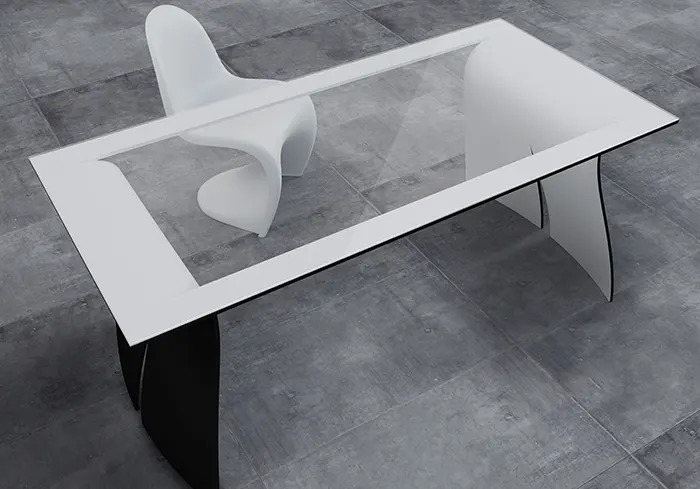
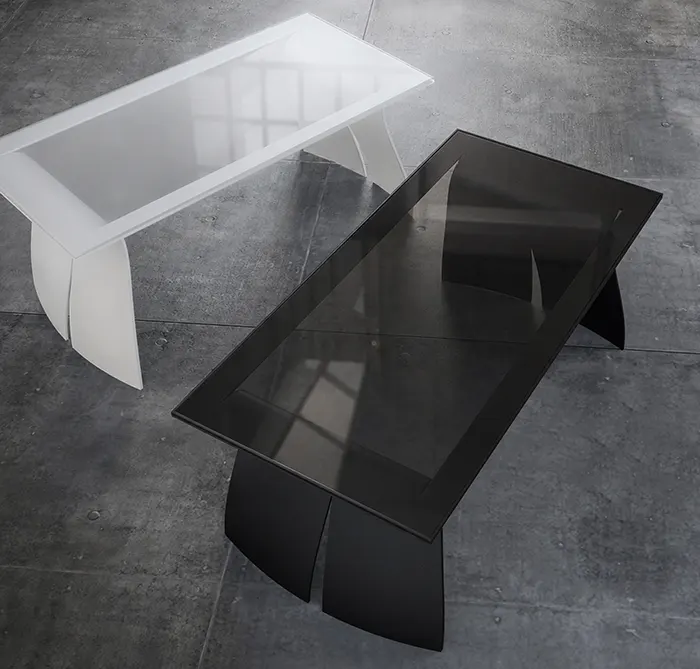
At first glance, the table looks stable. The proportions are balanced. The surfaces are fluid. The overall composition feels solid. Yet there is a problem. And that problem comes from the very same element that makes the project visually interesting.
Looking at the table from the front, it becomes clear that the legs are defined by soft and continuous curves. This decision was made to visually lighten the object and create a more dynamic appearance.
From an aesthetic perspective, the solution works. From a functional perspective, it does not.
The geometry of the legs reduces the structure’s ability to resist lateral forces. As a consequence, the table begins to oscillate. A behaviour that directly contradicts its primary function. And this is perhaps the most important lesson this project has taught me.
The same form that made the table interesting was also preventing it from properly doing its job.
Paradoxically, the issue was not related to the material. It was not related to manufacturing. It was not even related to dimensions. Even using a much stiffer material or increasing the thickness would not have solved the problem.
The mistake was embedded in the geometry itself. And that is precisely why it could have been discovered much earlier. A simple physical model would have been enough. Even a quick and imperfect one. A small cardboard model could have immediately revealed what the digital model was unable to show.
5. Why models are meant to challenge ideas
This experience profoundly changed the way I design today. Many people believe that models exist to present a project. In reality, their main purpose is completely different. They exist to reveal problems. A good model does not validate an idea. It challenges it. That is why I consider physical modelling one of the most important phases of the entire design process.
Every model asks a question. Is the structure stable? Are the proportions correct? Is the object usable? Does the form truly support its function?
The earlier a project is tested, the easier it becomes to correct mistakes before they turn into expensive problems.
Design is not about defending an idea. It is about constantly putting it under scrutiny. And it is precisely this continuous verification that allows intuitions to evolve into reliable solutions.
Animation illustrating the lateral movement generated by the geometry of the table legs.
6. What this project taught me
Looking back today, I do not consider this table a failed project. I consider it one of the projects that taught me the most. Because it revealed something that is often overlooked. Every phase of the design process exists for a reason.
When a project succeeds, it is easy to focus on the final result. When problems emerge, however, it becomes clear that the quality of the outcome depends on the entire path that led to it. In this case, creativity was not missing. Research was not missing. Technical development was not missing.
What was missing was a verification step. Just one.
Yet it was enough to compromise an important aspect of the entire project. This experience fundamentally changed the way I approach design.
Today, I see every phase of the process as part of a larger system in which research, sketches, models, testing and technical development work together to reduce uncertainty and improve decision-making.
Naturally, every project requires different tools and different levels of investigation. There is no universal formula. There is, however, one constant. The more an idea is tested, the greater the chance that it will become a successful solution. That is why I still choose to show this project today. Not because it is perfect. But because it continues to remind me of an important lesson.
Conclusion
In design, it is easy to fall in love with ideas. What is much harder is questioning them. And yet, this is exactly what transforms an intuition into a project. This table was born from a clear brief, a coherent concept and a technically feasible solution. Looking only at the renderings, it could easily appear to be a fully resolved project.
Reality tells a different story.
One skipped step was enough to leave a fundamental problem unresolved. Not because of a lack of knowledge. Not because of a lack of skill. Simply because some answers only emerge when we decide to test what we are designing.
The value of a model does not lie in confirming an idea. Its value lies in revealing mistakes before they become problems. And this is why design cannot be reduced to an image, a rendering or a good intuition. It is a process.
A path made of observation, questions, verification and continuous refinement. Because designing does not mean being right from the beginning.It means creating the conditions to discover, as early as possible, where you might be wrong.